 The Bedford Estates, London
A healthy male Eastern mountain bongo calf has been born at Woburn Safari Park, marking another important success for the conservation breeding programme of one of the world's rarest large mammals.
Welcoming a Rare Eastern Mountain Bongo Calf
The calf was born at 8.30pm on Wednesday 15 April to experienced mum Odongo, who previously raised calf Zambe. Keepers had been carrying out hourly checks after noticing signs that labour was imminent, and the birth progressed smoothly.
Weighing an estimated 15–20kg, the youngster was quickly on his feet and suckling well. Eastern mountain bongo calves can sometimes struggle with weak legs at birth, but keepers report that this calf was walking strongly and showing excellent early mobility.
Early Progress for the Energetic New Calf
Within just three days, the calf was with the herd and exploring the woodland ‘African Forest’ drive-through reserve. Keepers describe him as “very bold and energetic”, often seen running around energetically in the mornings before resting in the shelter later in the day.
He is feeding well from Odongo, who is recovering strongly and showing her typically feisty nature. As a protective mother, she initially kept the other females at a distance, but has since relaxed as the herd has settled around the new arrival. The other calves have been quick to greet him, and he is already beginning to form bonds typical of a social herd species.
A Vital Success for the Conservation Breeding Programme
The calf’s sire is Pessaka, (known affectionately to keepers as Sonny), and his arrival represents another important step for the EAZA Ex Situ Programme (EEP) for Eastern mountain bongo. Woburn’s breeding success contributes significantly to the UK population, with eight bongos now living at the Park and every new calf helping to strengthen the future of a disappearing species.
Young males typically move to other collections at around two years old to support wider breeding efforts, and keepers expect this calf will follow that pattern in future.
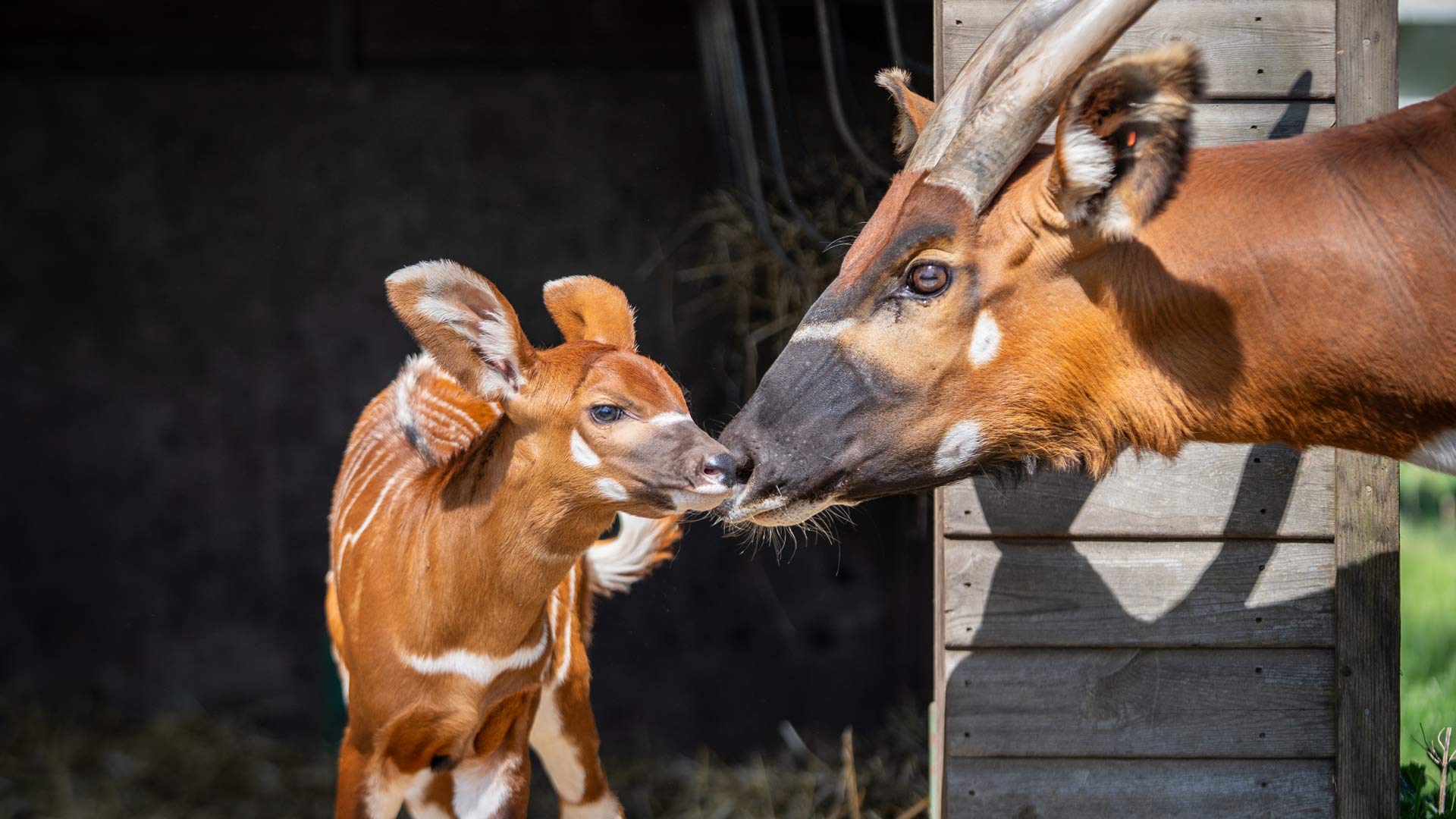
Eastern mountain bongos are critically endangered, with fewer than 100 individuals remaining in the wild. Habitat loss, hunting and fragmentation have pushed the species to the edge of extinction.
According to a 2024 peer‑reviewed study published in the conservation journal Oryx, only two of the four remaining wild mountain bongo subpopulations are breeding, with a combined estimated size of just 29–50 animals. Captive breeding programmes and initiatives like our animal adoptions therefore play a vital role in safeguarding the species' future.
Watch the Rare Bongo Calf Grow on the Road Safari
Ahead of the birth, keepers prepared deep, supportive bedding to help the calf gain a strong foothold when first standing. He continues to receive daily monitoring, with keepers observing feeding, mobility and herd interactions. He is expected to begin browsing independently within 6–8 weeks, although he will continue to suckle for some time.
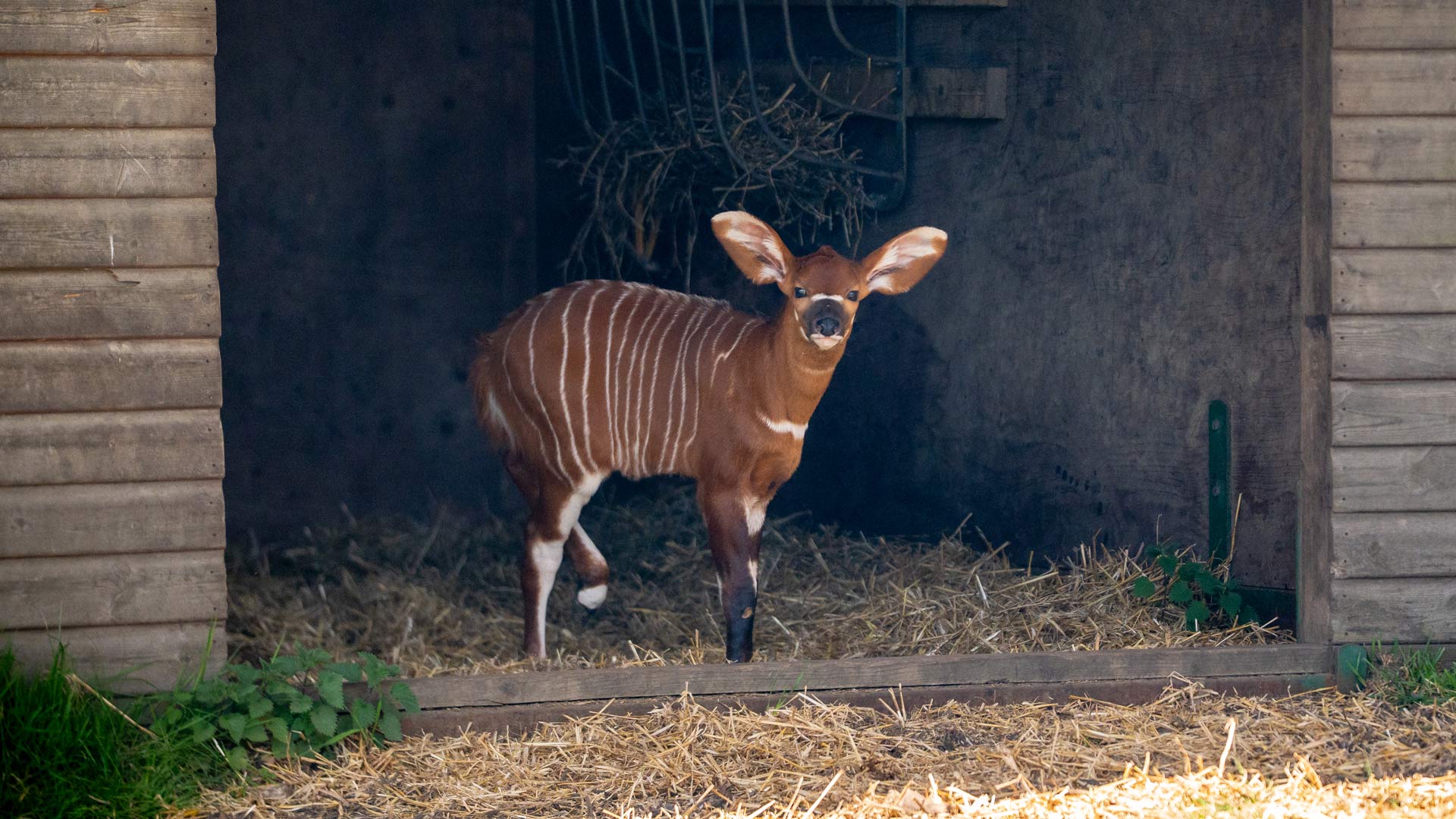
The calf is already visible to daily visitors in the Road Safari, where he can often be seen resting close to the herd or hiding away for short naps.
The team describe the birth as “another great success”, and are particularly excited to watch the calf’s development over the coming months. Book your Safari Tickets today to see his horn buds begin to appear.
They hope visitors will take away a deeper understanding of the species’ plight: “With fewer than 100 left in the wild, collections like ours remain incredibly important for the conservation of species such as the bongo.” says Tom Tobson, Head of Section, Reserves.